

Why Albert Einstein was fascinated by India’s philosophy
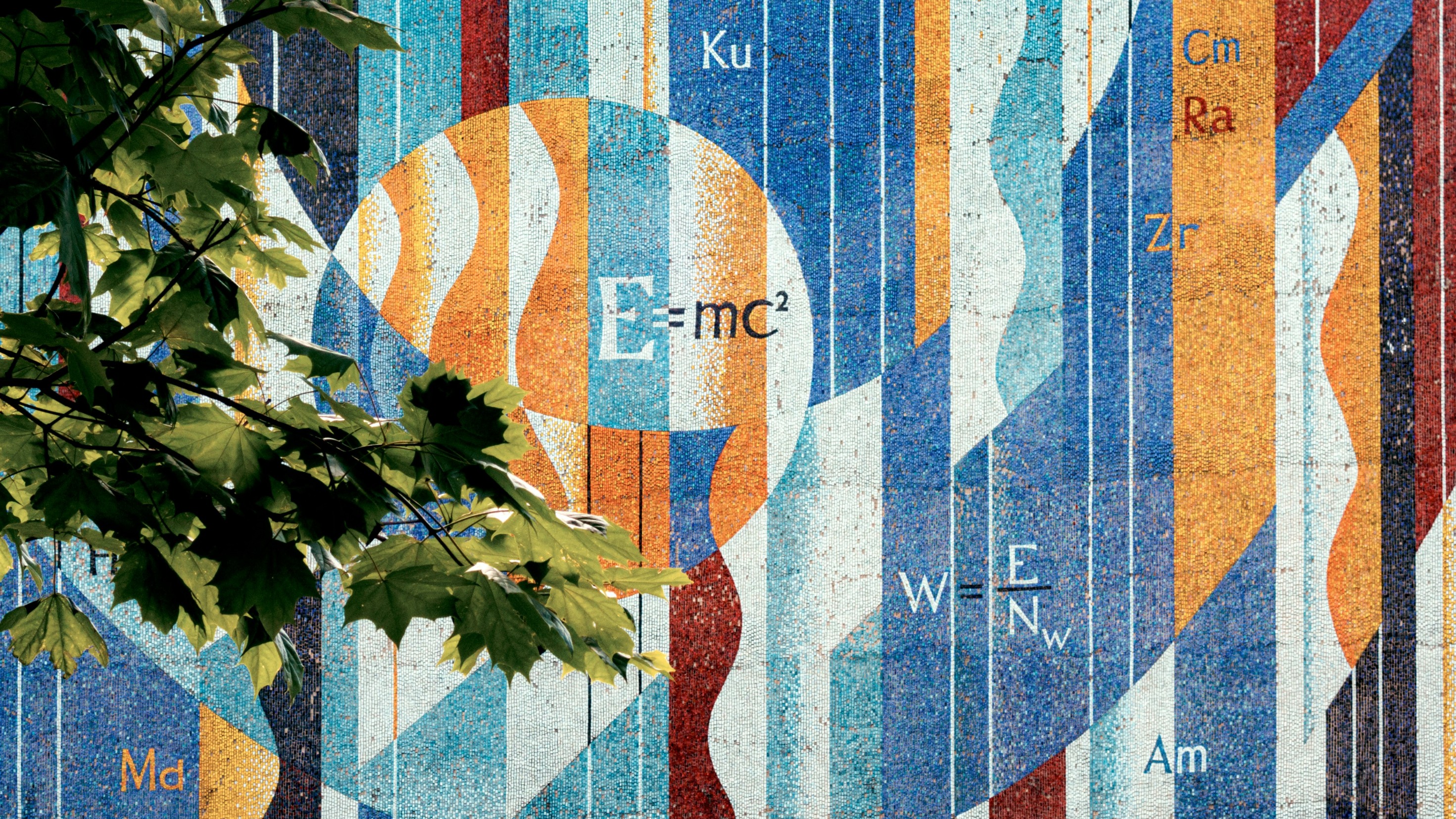
When most people hear the name Albert Einstein, they immediately think of genius. They picture the scientist whose theories transformed our understanding of the universe and whose name became synonymous with intelligence. Yet Einstein's legacy extends far beyond mathematics and physics. Behind the famous equations was a man deeply fascinated by life's biggest questions—questions about existence, reality, humanity, and our place in the cosmos.
It was this relentless curiosity that connected Einstein, at least philosophically, with one of the world's oldest civilizations: India.
Although Einstein never traveled extensively across India, he expressed admiration for ideas that resonated strongly with India's philosophical traditions. He respected Mahatma Gandhi, reflected on humanity's interconnectedness, and often spoke about the mystery and wonder of existence. These themes have been central to Indian philosophy for thousands of years.
Today, travelers from around the world come to India not only to admire its monuments and landscapes but also to explore the deeper ideas that have shaped its culture. In many ways, the same questions that intrigued Einstein continue to attract curious minds to India.
Einstein's scientific career was built on challenging conventional wisdom. While others accepted established ideas, he dared to ask fundamental questions. How does time work? What is gravity? What is the true nature of reality? His willingness to question assumptions led to discoveries that changed the course of human history.
Ancient Indian philosophers shared a similar spirit of inquiry. Thousands of years before modern science emerged, sages in India were asking profound questions about consciousness, existence, and the universe. The Upanishads, among the oldest philosophical texts in the world, explored ideas that continue to inspire scholars, scientists, and spiritual seekers today.
Both Einstein and Indian philosophers understood something important: progress begins with curiosity.
The important thing is not to stop questioning. Curiosity has its own reason for existing.
This famous Einstein quote perfectly captures a mindset that has long been embedded in India's intellectual heritage.
For modern travelers, India offers an opportunity to experience this heritage firsthand. Beyond its bustling cities and iconic landmarks lies a civilization built upon centuries of exploration, reflection, and discovery.
One of the most fascinating destinations for travelers seeking India's philosophical side is Varanasi. Often considered the world's oldest continuously inhabited city, Varanasi has attracted pilgrims, scholars, and seekers for thousands of years.
As the sun rises over the River Ganges, visitors witness a scene unlike anywhere else on Earth. Priests perform ancient rituals, pilgrims gather along the ghats, and life unfolds against a backdrop of traditions that have remained remarkably consistent across centuries.
For many travelers, Varanasi becomes more than a destination. It becomes an experience that encourages reflection on life's deeper questions.
Had Einstein stood along these sacred riverbanks, he might have appreciated the city's enduring search for meaning and understanding.
Another destination that embodies India's philosophical heritage is Rishikesh. Located at the foothills of the Himalayas, Rishikesh has earned an international reputation as the Yoga Capital of the World.
Travelers visit Rishikesh seeking many things: peace, self-discovery, adventure, or simply a break from the noise of modern life. Here, yoga, meditation, and spiritual practices are not trends but living traditions that have evolved over centuries.
The town's atmosphere encourages introspection. Surrounded by mountains and the flowing Ganges, visitors often find themselves slowing down and reconnecting with ideas that are easily overlooked in everyday life.
This emphasis on self-awareness aligns with many of the philosophical principles that fascinated thinkers across cultures and generations.
India's influence on global thought extends beyond Hindu philosophy. Bodh Gaya, one of Buddhism's most sacred sites, attracts visitors from every corner of the world.
It was here that Siddhartha Gautama attained enlightenment and became the Buddha. Under the Bodhi Tree, he developed insights that would eventually shape one of the world's major philosophical and spiritual traditions.
Today, travelers visiting Bodh Gaya encounter an atmosphere of tranquility and reflection. Monasteries representing dozens of countries stand side by side, symbolizing the universal appeal of ideas centered on compassion, mindfulness, and wisdom.
These are values that continue to resonate in a world searching for balance and meaning.
India's greatest treasures are not always found inside palaces or monuments; they are often found within the ideas that have shaped generations.
Of course, India's philosophical heritage is not limited to spiritual destinations alone. Even cities famous for their architecture and history reveal deeper layers of cultural significance.
Jaipur, often called the Pink City, showcases a fascinating blend of science, astronomy, art, and philosophy. The city's Jantar Mantar observatory demonstrates humanity's longstanding desire to understand the cosmos.
Standing among its massive astronomical instruments, visitors are reminded that curiosity about the universe is not exclusive to modern scientists. Long before telescopes and satellites, Indian scholars were studying celestial movements and seeking to understand humanity's relationship with the cosmos.
Such places highlight a recurring theme throughout Indian civilization: the pursuit of knowledge.
This pursuit also influenced one of India's most respected figures, Mahatma Gandhi.
Einstein greatly admired Gandhi and once remarked that future generations would scarcely believe that such a person had walked the Earth in flesh and blood.
Gandhi's philosophy of nonviolence transformed India's independence movement and inspired leaders around the world. His ideas demonstrated that moral courage could be more powerful than force.
For travelers, visiting places associated with Gandhi offers valuable insight into India's modern history and philosophical foundations. Museums, memorials, and historical sites reveal how ideas can shape nations and influence global movements.
Einstein searched for the laws governing the universe, while Gandhi searched for the principles capable of transforming humanity.
The connection between science and philosophy remains one of the most compelling aspects of India's appeal.
Many visitors arrive expecting colorful festivals, magnificent forts, and world-famous landmarks. While these attractions are undoubtedly impressive, they often discover something even more memorable: a culture that encourages reflection and dialogue.
Whether sharing conversations with local guides, attending cultural performances, participating in meditation sessions, or exploring ancient temples, travelers frequently encounter perspectives that challenge their assumptions and broaden their understanding of the world.
This intellectual and cultural richness helps explain why India continues to captivate visitors generation after generation.
At Global Junction, we believe that meaningful travel goes beyond sightseeing. A truly memorable journey allows travelers to connect with the stories, traditions, and ideas that define a destination.
India offers countless opportunities for such experiences.
Imagine watching the evening Ganga Aarti ceremony in Varanasi as thousands of lamps illuminate the river. Imagine practicing yoga at sunrise in Rishikesh while the Himalayas rise in the distance. Imagine walking through ancient temples whose walls have witnessed centuries of philosophical inquiry.
These experiences cannot be fully captured in photographs. They must be felt, experienced, and remembered.
For many travelers, this is where the real magic of India begins.
The country's philosophical heritage continues to influence literature, art, education, wellness, and even modern discussions about sustainability and mindfulness. Concepts developed thousands of years ago remain relevant in today's fast-changing world.
Einstein himself understood the importance of remaining open to new ideas. He believed that wonder and curiosity were essential not only for scientific progress but also for personal growth.
His perspective offers an important lesson for travelers.
The most rewarding journeys are often those that challenge us to think differently. They encourage us to see beyond familiar perspectives and embrace new ways of understanding the world.
India excels at creating such experiences.
From the sacred cities of the north to the peaceful backwaters of Kerala, from ancient Buddhist sites to magnificent Rajput palaces, every region offers unique insights into the civilization that has inspired thinkers for millennia.
While Einstein may be remembered primarily for his scientific achievements, his appreciation for mystery, interconnectedness, and the pursuit of truth reflects values that have long been central to India's philosophical traditions.
Perhaps this is why the connection between Einstein and India continues to resonate today.
Both represent humanity's enduring desire to understand the universe and our place within it.
Both remind us that curiosity remains one of our greatest strengths.
And both demonstrate that the search for knowledge is not confined to laboratories, libraries, or classrooms—it can also be found through travel, exploration, and meaningful cultural experiences.
At Global Junction, we invite travelers to discover an India that goes beyond guidebooks and postcards—an India of timeless wisdom, living traditions, and unforgettable journeys. Because sometimes the most extraordinary discoveries are not the places we visit, but the new perspectives we gain along the way.
Recommended Experiences
Our destination experts have paired this story with itineraries designed to bring it to life.


Speak to a specialist to start planning your tailor-made holiday...
Call one of our experts or arrange a video appointment for ideas and advice.

